Every modern contact center platform claims it “coaches agents in real time,” but when you’re actually responsible for SLAs and revenue, those claims need to translate into live, on-screen help that makes agents faster and calls sharper. Talkdesk, Five9, and ActiveCalls all ship AI coaching, transcripts, and prompts, but they don’t behave the same once you plug them into real queues, multilingual traffic, and Salesforce-based workflows. This guide breaks down how each one handles live conversations, how they plug into your stack, and where ActiveCalls makes a quieter but very serious case for teams that care about global calling, Arabic or regional languages, and practical AI that doesn’t require a PhD in “AI strategy” to launch.
1. What “Real-Time AI Agent Coaching” Actually Means in 2025-2026
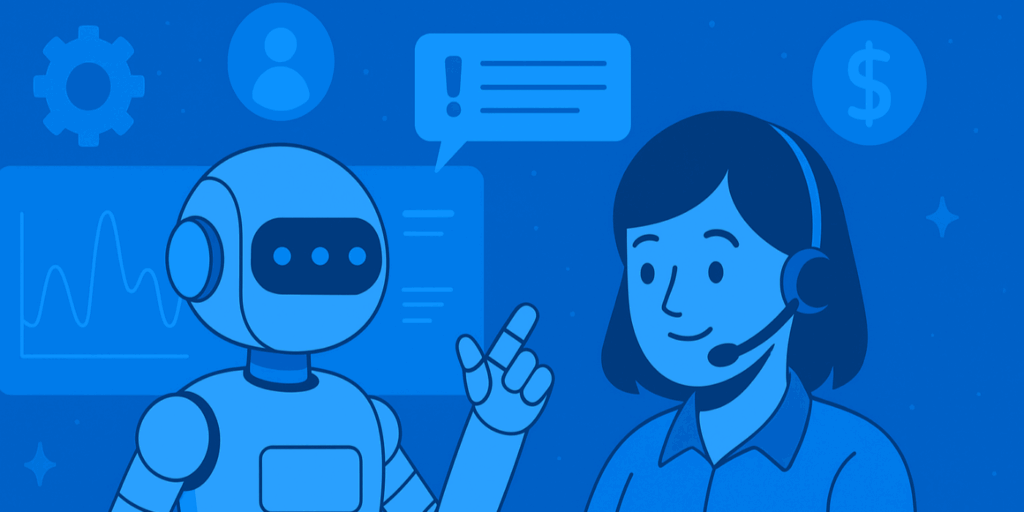
Most teams don’t need yet another AI buzzword; they need fewer escalations, faster handle times, and agents who sound like the brand on every call. Real-time coaching should do four hard things well: live transcription, intent detection, contextual prompts, and next-best action. Platforms like Talkdesk and Five9 wrap this into broader AI suites, while focused stacks such as real-time coaching engines push harder on in-call assistance instead of generic analytics. If your agents still alt-tab through knowledge bases during critical calls, you don’t have “coaching”; you have expensive lag.
The second piece is latency. Coaching that arrives three seconds too late is just a post-call suggestion with better marketing. When you design your stack, treat real-time AI like routing: it’s part of the call path, not an afterthought. That’s why many high-volume teams now evaluate AI tools with the same rigor they use for zero-downtime telephony architectures instead of just listening to sales demos.
2. Snapshot: Talkdesk vs Five9 vs ActiveCalls
Talkdesk and Five9 are established enterprise players with broad app ecosystems, workflow builders, and full-suite AI. They shine in North American and European deployments with complex routing and multi-channel flows. ActiveCalls, by contrast, is built as a global-first, cloud voice platform that bakes AI coaching directly into its contact flows while staying friendly to lean, scaling teams. Its sweet spot is the kind of operation that needs serious routing, multilingual support, and Salesforce or HubSpot integration without a nine-month implementation cycle, similar to how it approaches Salesforce-native AI call center setups.
The best fit depends on what you’re optimizing for. If you want a huge marketplace and are ready for heavyweight projects, Talkdesk and Five9 are strong. If your priority is global voice coverage, real-time coaching that’s actually used by agents, and clean integrations into a lean stack, ActiveCalls often gets you there faster, especially when paired with disciplined routing and the kind of metrics thinking seen in modern contact center scorecards.
3. How Each Platform Handles Live Calls in the Real World
On a live call, three things decide whether agents actually “feel” coached: how quickly the transcript stabilizes, how accurate the intent detection is, and whether the prompt fits the brand and channel. Talkdesk and Five9 both stream transcripts and serve guidance into their softphones; they’re strong when your processes are already well-modeled and you have ops teams to maintain flows. ActiveCalls leans into pre-built journeys for sales, support, and collections, similar to how it ships max-revenue dialer flows so teams don’t start from a blank canvas.
If your calls span English, Arabic, and South Asian languages in the same queue, the “real-time” story gets harder. Here, latency and accent handling matter more than polished dashboards. Many teams pair ActiveCalls’ AI with carefully designed routing and call segmentation borrowed from global setups like multi-office VoIP deployments, so coaching is applied where it moves the needle most instead of everywhere at once.
4. Coaching Use Cases: Sales, Support, and Compliance
Sales teams care about objection handling and closing language. Support teams care about empathy, de-escalation, and accurate troubleshooting. Compliance teams care that required disclosures are read every time. Talkdesk’s AI can be configured with highly detailed scripts and scoring rules, while Five9’s AI ties tightly into campaign logic and workforce optimization. ActiveCalls narrows in on the practical library of moments that recur on most calls — pricing pushback, cancellation threats, upsell opportunities — using data from automation-heavy environments like AI-powered sales acceleration engines.
For TCPA-sensitive outbound or regulated verticals such as healthcare and banking, you want AI that nudges agents about consent language and prohibited phrasing, not just generic “be nicer” prompts. That’s where combining AI with clear rules from frameworks like modern TCPA compliance playbooks keeps your coaching aligned with legal reality, not just tone and sentiment.
5. Integrations: Salesforce, HubSpot, and the Rest of Your Stack
In practice, your AI coaching is only as good as the data it can see. Talkdesk and Five9 both integrate deeply with Salesforce, ServiceNow, and other enterprise CRMs, pushing transcripts and summaries into objects and cases. ActiveCalls leans into focused CTI and data flows for Salesforce and HubSpot, where voice events, AI summaries, and coaching markers become part of a single customer record — the same pattern used in its integration-heavy call center guides. That means sales leadership can see, for example, how many deals were saved by specific prompts, not just how many calls ran.
Think beyond CRM. If you run a healthcare, banking, or e-commerce operation, you’ll want AI coaching connected to ticketing, order management, and payment systems as cleanly as your telephony is connected across offices in global PBX deployments. The less your agents have to click, the more their cognitive capacity is available for applying the coaching.
6. Cost, Complexity, and Time-to-Value
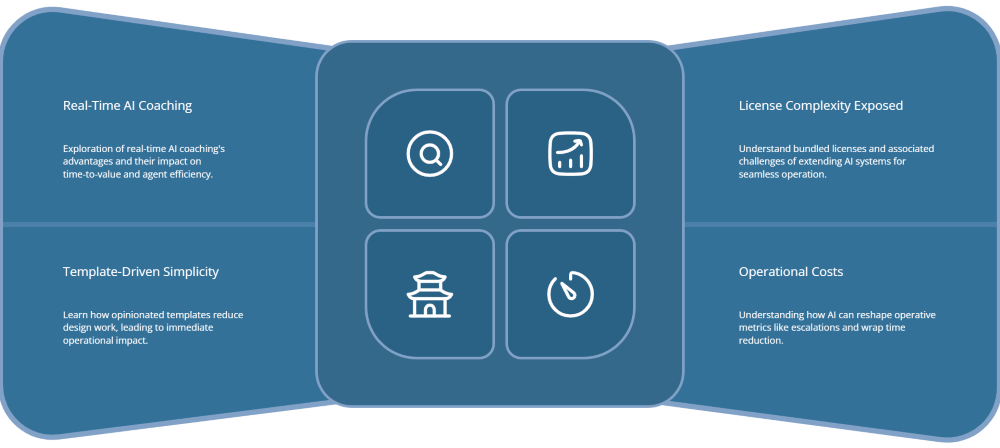
Real-time AI coaching has two cost layers: licenses and operational complexity. Talkdesk and Five9 often come bundled into broader AI suites, which can be efficient if you’re migrating your entire CCaaS stack and have the project team to match. But for many teams, the hidden cost is months of design work before agents see their first helpful prompt. ActiveCalls tries to compress this by shipping opinionated templates aligned with dialer logic similar to what’s used in high-velocity predictive dialing strategies, so coaching goes live with a smaller configuration surface.
There’s also the labor cost side: if AI reduces wrap time, escalations, or the need for shadowing, your WFM spreadsheet changes. That’s why an honest evaluation looks at data like labor per thousand calls and compares it to baselines from automation-heavy operations such as those in global remote-team VoIP studies. If your AI plan doesn’t move those numbers, it’s decoration.
7. How to Choose the Right AI Coaching Stack for Your Team
Start with your reality, not vendor decks. Map three things: where agents currently struggle, which channels and languages drive the most value, and which systems must share data bi-directionally with your coach. If you’re already locked into an enterprise suite and have the team to customize it, deep AI tools from Talkdesk or Five9 can be powerful. If you’re building or modernizing a cloud telephony footprint and want AI that travels with you across regions and verticals, a platform like ActiveCalls — which already thinks in terms of SIP-to-AI evolution paths — may unlock value faster.
Finally, pilot ruthlessly. Pick one queue, one language pair, and a small group of agents. Define success (fewer repeats, higher conversion, better CSAT) and run a 4–8 week experiment. Compare outcomes just like you would when moving from manual dialing to AI-optimized dialer stacks. The tool that makes those numbers move in your environment — not on a benchmark slide — is your real winner.
8. FAQ: Making Sense of AI Coaching Tools in 2025
Click each question to expand. Use this as a quick buyer’s checklist before you lock into a long-term platform.
Do I need AI coaching if my team already has scripts and QA?
Will agents actually use real-time prompts, or just ignore them?
How do these tools affect compliance and legal risk?
What’s the fastest way to pilot Talkdesk, Five9, or ActiveCalls AI coaching?
Whether you land on Talkdesk, Five9, ActiveCalls, or a combination, the real competitive edge is not “having AI” but using it relentlessly. The teams that win in 2025 are the ones that treat real-time coaching like a living product: constantly tuned, tightly integrated, and measured against the exact metrics that keep their business alive.