Every serious sales or support leader eventually hits the same wall: the calls are happening, the CRM is “live,” but half the value is lost because your CTI widget is slow, brittle, or logging the wrong data. Live call integrations decide whether screen pops are instant or laggy, whether dispositions are clean or chaos, and whether AI can do anything useful with your conversations. This 2026 guide walks through 50 concrete CTI tools and patterns for Salesforce, HubSpot and Zendesk, plus how to choose, architect and roll them out without breaking agents or pipelines.
1. Why live call integrations decide whether your CRM works or not
Most teams discover CTI limits the hard way: agents double-log notes, screen pops lag behind introductions, and analytics show “calls” but not outcomes. The root problem is usually that telephony and CRM were chosen separately, then glued together as an afterthought. A better model is to design around call center software integrations from day one, treating CTI as part of the product, not a plugin. That is why deeper integration work like your call center software integrations buyer’s guide and the broader 150-integration benchmark piece matter so much for authority and intent capture.
At the live-call layer, there are four jobs CTI must do flawlessly: identify the customer (screen pop), control the call (click-to-dial, hold, transfer), log what happened (dispositions, notes, recordings, tags), and feed automation (workflows, routing updates, AI). When any of these are weak, performance drops: agents improvise workflows, compliance gets risky, and your reporting looks like static. The 50 tools below are less about “brand names” and more about patterns you can combine with playbooks like the CRM + call center integration checklist and your VOIP + CRM handle-time benchmarks.
2. 50 live call integration tools and patterns for Salesforce, HubSpot and Zendesk
Use this as a practical menu, not a random directory. Group 1–14 are Salesforce-heavy, 15–24 are HubSpot-led, 25–32 are Zendesk-focused, and 33–50 are multi-CRM or pattern-based integrations that you can implement with vendors or your own engineering. This table also gives you raw material for future comparison posts alongside your Salesforce CTI comparison, Zendesk integration guide and HubSpot CTI playbook.
“““
| # | Tool / Connector | Primary CRM Focus | Integration Type | Standout Capability | Best For |
|---|---|---|---|---|---|
| 1 | Salesforce Service Cloud Voice | Salesforce | Native CTI framework | Deep omni-channel routing, embedded softphone, transcripts | Enterprise support teams standardising on Salesforce |
| 2 | Salesforce Open CTI Softphone (custom) | Salesforce | Custom Lightning Web Component | Full control over UI, call controls and logging logic | Teams with engineering support and strict workflows |
| 3 | Amazon Connect CTI Adapter for Salesforce | Salesforce | Managed adapter | Ties AWS routing/IVR into Salesforce records and tasks | Large-scale contact centers on AWS |
| 4 | Five9 for Salesforce | Salesforce | Embedded CTI widget | Predictive dialer controls inside CRM; strong outbound tooling | Sales-heavy teams replacing manual dialing |
| 5 | NICE CXone for Salesforce | Salesforce | AppExchange integration | Advanced routing and analytics surfaced in Salesforce UI | Enterprise CX programs with heavy QA/analytics needs |
| 6 | Talkdesk for Salesforce | Salesforce | Embedded softphone | Click-to-call, screen pop, AI summaries tied to records | Modern cloud stacks replacing legacy ACD |
| 7 | RingCentral for Salesforce | Salesforce | AppExchange CTI | Unified phone + SMS controls with logging into activities | Sales teams needing blended voice/SMS outreach |
| 8 | Aircall for Salesforce | Salesforce | Native CTI app | Simple setup, tag-based logging, shared inbox features | SMB sales/support pods scaling from spreadsheets |
| 9 | Genesys Cloud CX for Salesforce | Salesforce | Embeddable framework | Complex routing and compliance-aware recording in CRM | Regulated industries with global volumes |
| 10 | Twilio Flex Salesforce CTI | Salesforce | Programmable CTI widget | Highly customisable flows, screen pops and tasks | Product-led orgs wanting full control over call flows |
| 11 | Zoom Contact Center Salesforce CTI | Salesforce | Embedded widget | Voice + video escalation from case/contact records | B2B support where screen-share is common |
| 12 | Dialpad for Salesforce | Salesforce | CTI + AI transcription | Real-time transcripts and sentiment in CRM timeline | Insight-driven sales and CS teams |
| 13 | Vonage Contact Center for Salesforce | Salesforce | Native integration | Strong outbound, scripting and skills routing | Hybrid inbound/outbound operations |
| 14 | ActiveCalls Salesforce CTI Widget | Salesforce | Embedded WebRTC softphone | Low-latency calling with auto-logging and AI-ready data | Teams wanting flexible routing plus AI add-ons |
| 15 | Aircall–HubSpot Connector | HubSpot | Marketplace app | Click-to-call from deals, auto-association to contacts | Growth teams with simple playbooks |
| 16 | RingCentral–HubSpot Integration | HubSpot | CTI + logging | Call and SMS history inline with deals and tickets | SMBs centralising comms in HubSpot |
| 17 | CloudTalk–HubSpot CTI | HubSpot | Softphone widget | Power dialer and tagging for outbound sequences | SDR teams scaling cold outreach |
| 18 | Dialpad–HubSpot CTI | HubSpot | AI CTI integration | AI notes synced to companies, deals and tickets | Revenue orgs leaning into conversation intelligence |
| 19 | Twilio–HubSpot Voice Connector | HubSpot | Programmable CTI | Custom flows tied to HubSpot workflows and webhooks | Product-led teams with dev resources |
| 20 | ActiveCalls–HubSpot CTI Widget | HubSpot | Embedded VOIP panel | Cloud routing + AI-ready logs inside the CRM sidebar | Scaling teams designing around the HubSpot CTI playbook |
| 21 | Aircall–Zendesk CTI | Zendesk | App panel | Ticket pop on inbound, one-click call from tickets | Support desks upgrading from basic PSTN |
| 22 | RingCentral–Zendesk Integration | Zendesk | CTI app | Voice + SMS logs sitting in ticket history | Teams with heavy SMS + ticket workflows |
| 23 | Five9 for Zendesk | Zendesk | Embedded adapter | Predictive outbound and inbound queues in Zendesk UI | BPO-style operations with Zendesk spine |
| 24 | NICE CXone for Zendesk | Zendesk | Omnichannel CTI | Advanced routing + recording with ticket sync | Enterprises modernising legacy ACD around Zendesk |
| 25 | Talkdesk for Zendesk | Zendesk | Cloud CTI app | AI-powered suggestions with ticket context | Digital-first support teams |
| 26 | 8×8–Zendesk Contact Center | Zendesk | CTI + chat | Voice, chat and SMS consolidated in one workspace | Multi-channel desks consolidating vendors |
| 27 | Zendesk Talk Partner Edition | Zendesk | Native CTI framework | Lets third-party telephony plug into core Talk features | Teams standardising on Zendesk but mixing telcos |
| 28 | Twilio Flex–Zendesk Adapter | Zendesk | Programmable CTI panel | Highly tailored flows with ticket-centric routing | Product-led organisations needing custom logic |
| 29 | ActiveCalls–Zendesk CTI Widget | Zendesk | Embedded WebRTC softphone | Low-latency calls, AI-ready logs, clean ticket links | Zendesk teams upgrading from basic Talk setups |
| 30 | Browser-based CTI Chrome Extension (multi-CRM) | Salesforce / HubSpot / Zendesk | Overlay extension | Click-to-dial + basic screen pop across web apps | Scrappy teams unifying disjointed tools quickly |
| 31 | ActiveCalls Web CTI Panel (multi-CRM) | Any CRM with URL | Embedded iframe/WebRTC | Single softphone experience across multiple CRMs | BPOs serving several client CRMs |
| 32 | Standalone WebRTC Softphone Widget | Any web app | JS widget | Embed call controls where agents actually work | Product teams adding voice to internal tools |
| 33 | Microsoft Teams Phone–Salesforce Integration | Salesforce | Telephony connector | Surface Teams calls as Salesforce activities | Orgs standardised on Teams for voice |
| 34 | Zoom Phone–HubSpot Integration | HubSpot | Marketplace app | Logging Zoom calls into contacts and deals | Hybrid voice/video sales motions |
| 35 | 8×8 Contact Center Salesforce CTI | Salesforce | Embedded adapter | Advanced routing + analytics surfaced in CRM | Distributed support teams with complex queues |
| 36 | RingCentral Engage Voice CTI | Salesforce / Zendesk | Omnichannel CTI | Blended inbound/outbound and digital channels | Contact centers upgrading from siloed tools |
| 37 | CloudTalk Multi-CRM CTI Pane | Salesforce / HubSpot / Others | Embedded softphone | Use one telephony stack across multiple CRMs | Agencies and BPOs |
| 38 | Genesys Cloud CX Embeddable Framework | Salesforce / Zendesk | SDK-based CTI | Custom UIs with deep routing and analytics | Enterprises with in-house dev teams |
| 39 | Amazon Connect Streams API Widget | Any CRM | JS embeddable widget | Brings full Connect controls into CRM tabs | AWS-first teams needing flexibility |
| 40 | Twilio Voice–Zendesk iFrame Integration | Zendesk | Custom iframe app | Fine-grained control over how calls map to tickets | Teams with unusual ticketing flows |
| 41 | Zapier Call Logging Flows | Any CRM | iPaaS workflow | Push call events into tasks/notes without heavy dev | SMBs gluing VOIP + CRM for the first time |
| 42 | Make (Integromat) Telephony Automations | Any CRM | Low-code automation | Complex multi-step updates across systems | Ops teams orchestrating several tools |
| 43 | Tray.io CTI Orchestration | Any CRM | Enterprise iPaaS | Scale-out integrations with governance | Mid-market / enterprise integration teams |
| 44 | MuleSoft Telephony Flows | Salesforce & others | ESB / iPaaS | Connects legacy telephony with modern CRMs | Enterprises mid-way through PBX migration |
| 45 | Custom Lightning Web Component Softphone | Salesforce | Bespoke CTI UI | Exact match to internal processes, no vendor lock-in | Salesforce-heavy orgs with dev capacity |
| 46 | Custom HubSpot Sidebar CTI Extension | HubSpot | JS sidebar app | Bring any SIP/VOIP controls into HubSpot records | Teams with non-mainstream telephony vendors |
| 47 | Custom Zendesk Sunshine CTI App | Zendesk | Sunshine app | Deep ticket + profile awareness for calls | Support orgs with complex user models |
| 48 | AI Agent Assist Overlay (e.g. ActiveCalls) | Salesforce / HubSpot / Zendesk | Real-time AI side panel | Live suggestions, summaries and next-best actions | Teams embracing AI call center software |
| 49 | QA-Focused CTI Widget with Auto-Tagging | Any CRM | CTI + QA overlay | Tags intents, outcomes and compliance flags on calls | Teams moving to 100% AI QA coverage |
| 50 | Compliance-Focused Call Recording CTI Panel | Any CRM | CTI + policy controls | Granular pause/resume, consent flags, data masking | Regulated sectors aligning with 2026 recording rules |
3. How to choose the right CTI widget for your stack
The worst CTI mistakes come from picking tools by logo or price instead of by call path and data path. Start by mapping journeys inside your CRM: where agents sit (objects, views, workspaces), what information they need before answering, and what must be written back after the call. Then overlay integration options from your 100-integration savings guide and the fuller 150-integration ROI study. You want CTI that minimises clicks and maximises structured data for routing and AI.
As a decision checklist, you can lean directly on the 37-point CRM + call center checklist. Critical filters include: where the softphone lives (object vs. console), how quickly screen pop loads for known numbers, whether dispositions and tags are configurable, and how the integration behaves when calls come from mobile agents or remote networks. Finally, evaluate how each CTI option coexists with your existing routing stack as described in your predictive routing strategy and zero-downtime architecture work.
4. Architecting low-latency live call flows across Salesforce, HubSpot and Zendesk
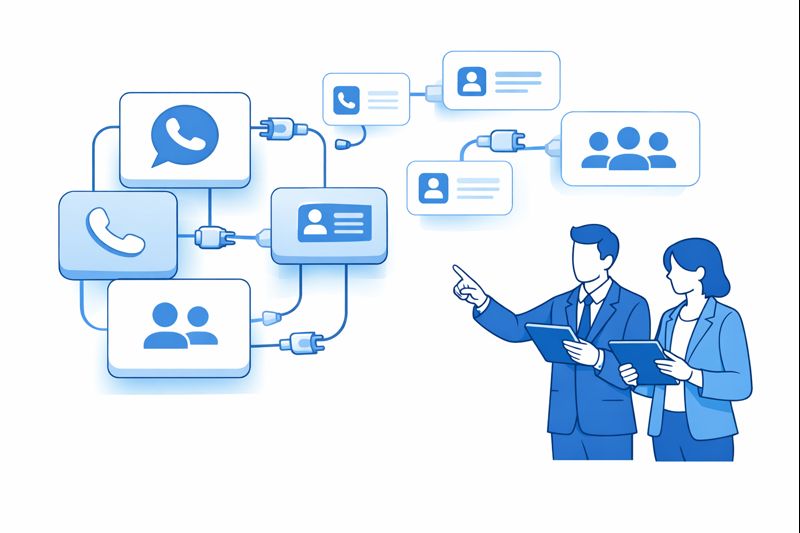
From the user’s perspective, the perfect CTI simply “snaps” open when a call arrives and shows the right record. Under the hood, that requires a clean architecture: telephony → CTI widget → CRM object → automation. If you are already thinking in terms of cloud telephony futures from SIP-to-AI migration pieces and PBX replacement work like legacy migration guides, CTI becomes one more layer to design rather than bolt-on. The key is to minimise hops between your dialer, routing engine and CRM.
For Salesforce, that often means choosing between a deeply embedded CCaaS integration and a programmable CTI like those in your Salesforce CTI blueprint. For HubSpot, it’s about making sure CTI respects pipelines, attribution and automation rules set out in the HubSpot CTI playbook. For Zendesk, keep ticket-centric flows from your Zendesk setup guide at the center. In all three cases, design for the shortest path between call events and CRM updates, then hang AI, QA and reporting on top.
5. 90-day rollout plan for CTI upgrades
Days 1–30: Audit, map and pick patterns. Inventory every live call integration you have today: dialers, softphones, browser extensions, iPaaS flows. Map which teams use Salesforce, HubSpot and Zendesk, and where double-logging or latency shows up. Use data from your reporting and analytics dashboards to tie CTI issues to handle time and FCR. Shortlist 8–10 tools from the 50-row table that fit your target architecture and remove obvious overlaps.
Days 31–60: Pilot in one CRM and one region. Choose a single CRM (for example, Salesforce service) and implement your preferred CTI pattern using the guidance from AI-native Salesforce integration work. Define success metrics: reduced handle time, higher logging completeness, better agent adoption. Keep the scope tight: one line of business, one geo, a limited set of call queues. During this period, also validate how your CTI behaves under real network conditions, using the resilience lens from downtime-elimination architecture.
Days 61–90: Roll out, standardise and layer in AI. Once the pilot proves stable, scale to other queues and CRMs in phases. Create CTI standards covering which tools are allowed, how they log data and how they interact with routing. Document these standards in your internal “integration hub” alongside articles like the integrations buyer’s guide. Only after this foundation is stable should you layer in advanced AI (agent assist, QA, analytics) using the playbooks from AI contact center strategy and AI call analytics in regional markets.