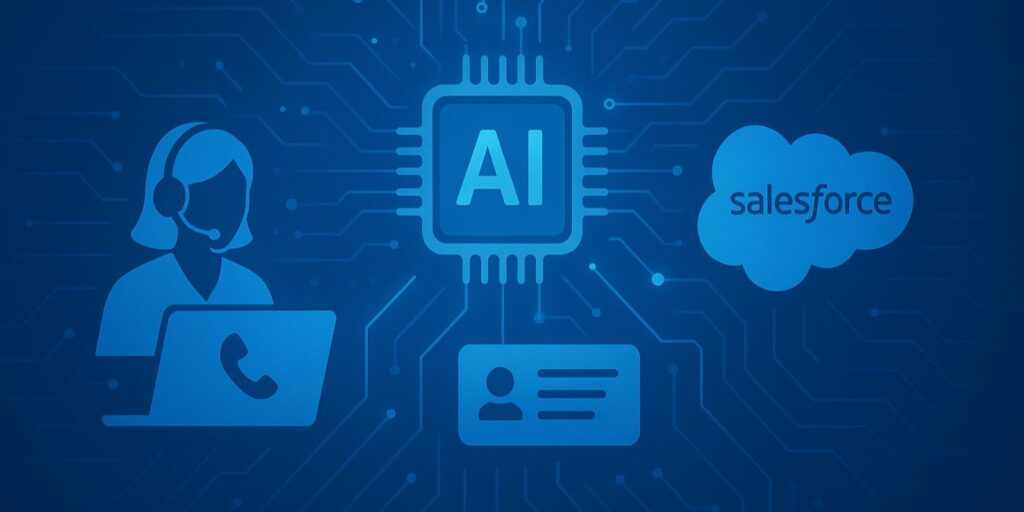
Every contact center leader knows the math: with classic sampling, your QA team listens to 1–3% of calls and guesses the rest. That made sense when all you had was spreadsheets and sticky notes. In 2025, that’s a liability. Customers expect every interaction to feel consistent, regulators expect proof you’re doing your homework, and executives expect CX and revenue to move together. AI quality monitoring is what finally flips you from “spot-check theater” to 100% coverage – scoring, flagging, and coaching every conversation without hiring an army of reviewers.
1. Why Manual QA Is Broken (And Getting Worse Every Quarter)
The traditional QA model was built for a world of low volume and low expectations. A few reviewers pull random calls, score them on a rigid form, and hope they’ve heard something representative. In reality, they often listen to the easiest calls, not the riskiest ones. With omnichannel volume exploding on cloud platforms like modern contact center stacks, that gap just keeps widening. You quickly reach a point where 97–99% of interactions are never heard by a human.
That creates blind spots everywhere: non-compliant disclosures, churn language, broken processes, and coaching opportunities. Leaders see NPS, CSAT, and revenue wobble but can’t explain why. Meanwhile, agents get generic feedback based on a handful of calls. Compare that to data-rich architectures described in zero-downtime call systems, where every technical event is logged; quality should be treated the same way – fully observable, not sampled.
2. What “AI Quality Monitoring” Actually Means in 2025-2026
Real AI QA is more than transcription plus a surface-level score. Think of it as a pipeline: capture every call, convert speech to text, detect topics and outcomes, apply policy checks, score behavior, and then route insights to the right people. The best stacks plug directly into your cloud contact center platform so you’re not exporting audio to a separate analytics island. Instead, QA becomes a native extension of your routing, reporting, and coaching flows.
Under the hood, this pipeline combines several models: keyword and phrase spotting for compliance, sentiment and emotion tracking, intent classification, outcome tagging, and conversation-structure analysis (did the agent greet, verify, resolve, recap?). These models are tuned to your vertical – banking, healthcare, SaaS – and your markets, whether you’re running US-only English queues or multilingual operations similar to Arabic-heavy Dubai centers.
3. The Data and Scorecard Foundations You Need Before You Automate
AI can’t fix a broken scorecard. Before you wire in models, simplify what “good” means in your environment. Most leaders end up with 5–8 core behaviors that matter: greeting, verification, discovery, solution clarity, next steps, and compliance. Those behaviors should align with the metrics you already track in frameworks like high-impact KPI guides. If your QA form has 40 checkboxes, it’s a policy document, not a coaching tool.
Next, make your scoring rules machine-readable. That means translating “Agent showed empathy” into observable signals – apology phrases, acknowledgement structures, silence handling. Similarly, “Offered right solution” becomes a combination of intent detection and outcome mapping. This is the same decomposition used in AI-first QA architectures, where each behavior maps to a pattern the model can track across thousands of calls.
Finally, agree upfront on thresholds for alerts: what constitutes a high-risk call, a coaching opportunity, or a trend worth escalation. If you don’t decide that early, your AI QA project will drown in interesting but unactionable insights.
4. How AI QA Fits Into Your Telephony and Routing Stack
Quality monitoring doesn’t live in a vacuum. It rides on top of your telephony architecture, routing logic, and integrations. If you’re still moving recordings around via FTP from a legacy PBX, you’ll never reach 100% coverage. That’s why most teams modernizing QA also modernize their voice layer, moving toward resilient cloud platforms similar to downtime-resistant call center setups. Once calls are captured centrally, AI can process them continuously instead of in monthly batches.
Routing is equally important. AI QA becomes much more powerful when it knows which queue, campaign, or segment a call belongs to. That metadata comes from the same queue configurations and routing strategies discussed in predictive routing playbooks. When a call is tagged as “VIP retention” or “high-risk sales disclosure,” your models can apply different rules, and your reviewers can prioritize accordingly.
Finally, integration with CRM and ticketing is non-negotiable. A great AI QA event should be visible from the same places agents and supervisors live every day – contact records, case timelines, and coaching dashboards – not buried in a separate platform.
5. From Scores to Coaching: Closing the Loop With Agents
Scores no longer impress anyone. What moves behavior is specific, frequent, and fair feedback. AI QA gives you enough coverage to do that well. Instead of telling an agent, “Your empathy score is low,” you can show them 10 calls where they rushed the opening, interrupted the customer, or skipped recap. And because models see patterns, they can surface “golden call” examples that match your best performers, much like the behavioral insights extracted in revenue-optimized dialer programs.
The most effective teams plug AI QA directly into real-time coaching. For example, when a call hits certain risk markers (escalation language, cancellation threats, compliance gaps), supervisors can be alerted through their dashboards and join or whisper-coach in the moment. Pair that with live AI assist engines that suggest better phrasing or next actions, and QA stops being an after-the-fact audit – it becomes part of the conversation.
6. Risk, Compliance, and Legal: Using AI QA as a Shield, Not a Threat
Regulators don’t care that you deployed AI; they care whether customers were treated fairly and rules were followed. The good news is that AI QA can give you stronger evidence and earlier warning than manual programs ever could. Start by encoding your regulatory obligations as explicit checks: disclosure language, consent phrases, prohibited claims, and risk cues. These rules can mirror the ones you already monitor in outbound environments using TCPA-safe dialing frameworks, just applied to QA instead of dials.
Next, define escalation flows. High-risk calls (e.g., legal threats, vulnerable customers, explicit non-compliance) should be automatically surfaced to specialist teams within hours, not at month-end. Store transcripts and scores alongside recordings in a compliant, access-controlled environment similar to data-safe cloud deployments. That way, when an auditor asks, “How do you know agents follow policy?” you can show patterns over thousands of calls, not a binder of anecdotes.
7. Cost and ROI: Why AI QA Often Pays for Itself in One Contract Cycle
The finance question is simple: “Will we spend more on AI than we save on headcount or risk?” In most cases, the answer is no – especially once volumes cross a few dozen agents. Traditional QA scales linearly with calls; AI QA scales with compute and architecture, much like cost-efficient voice networks described in global VOIP case studies. You can monitor 10x more interactions without a corresponding 10x QA hiring plan.
ROI shows up in several places: fewer compliance incidents, lower churn due to earlier detection of pain, higher conversion because winning behaviors spread faster, and reduced rework from bad resolutions. Add in labor savings from automating low-value QA work – call selection, basic scoring, form filling – and you’re following the same cost curve outlined in AI labor-reduction playbooks. That’s why many teams treat AI QA as an operating necessity, not an experimental budget line.
8. 90-Day Roadmap to AI Quality Monitoring With 100% Coverage
Days 1–30: Map reality. Audit your current QA process: forms, sampling, calibration rituals, and reporting. Quantify what percentage of calls you actually review and how long it takes to spot a real issue. In parallel, ensure your telephony stack can reliably capture and expose recordings, whether you’re running a single-region shop or multi-site operations similar to multi-office VOIP layouts. Pick 2–3 queues as your pilot focus – ideally a mix of sales and service.
Days 31–60: Deploy models and calibrate. Turn on transcription, basic scoring, and policy checks for those pilot queues. Have your existing QA team review AI-scored calls and compare them to human judgments. Use this phase to refine rules, tweak thresholds, and streamline your scorecard. Integrate QA outputs into your reporting stack, alongside metrics from routing and feature usage, using integration patterns like those in integration blueprints. Start small with coaching: one or two behaviors, a handful of agents, but daily feedback.
Days 61–90: Scale and standardize. Expand AI QA across more queues, add new behaviors (sales effectiveness, retention savvy, empathy), and formalize “playbooks” that describe how supervisors respond to insights. Tie QA metrics into leadership dashboards alongside AHT and FCR, taking cues from AI-ready US call center architectures. By day 90, your goal isn’t perfection; it’s a working loop where AI surfaces patterns, humans act on them, and you track the impact on CX and revenue.
9. FAQ — AI Quality Monitoring That Replaces Manual QA
Manual QA gave you a tiny peephole into your customer conversations. AI quality monitoring, wired into a modern voice stack, turns the lights on in every room – every call, every behavior, every risk. Once you’ve experienced 100% coverage, it’s hard to imagine running a 2025 contact center any other way.